
Walk through a house during framing, and you can see from the entry straight to the back wall. Homeowners on those walkthroughs usually want to talk about the view from the kitchen or how the primary suite feels now that it has a shape.
Hardly anyone asks about the cable that will run through the studs, even though it will help determine how the house works for years to come. At Creative Sound and Integration, we plan this infrastructure for homes in Scottsdale, Paradise Valley, and along the Kona coast before framing begins, so the wiring can be coordinated while the walls are still open.
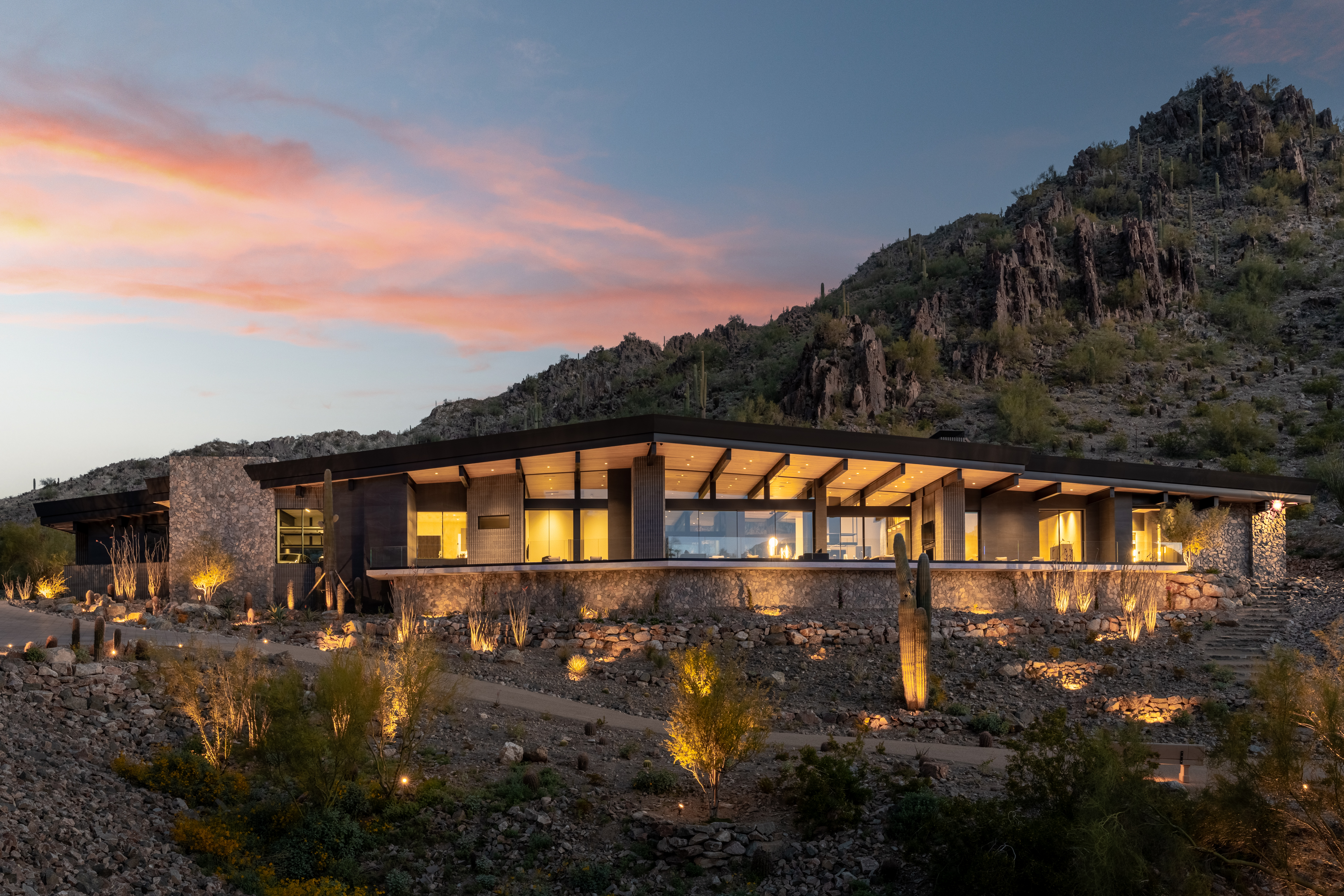
A Crown Canyon Estates home in Paradise Valley, with technology planned from the start.
Just like you wouldn’t build a house and figure out the plumbing after the drywall was up, wiring your home for connectivity and entertainment deserves that same early attention.
What Belongs Inside the Walls?
Think about electrical outlets. You don’t pick every lamp before move-in day, but you’d be frustrated to find a wall with no outlet where you wanted one. At CSI, we plan cabling the same way, considering how you’ll use each space now and what you may want to add later.
That means planning network connections for home offices, TVs, wireless access points, cameras, and other connected equipment. Some locations need multiple cable runs, particularly where several devices or separate audio and video connections are involved. Cable type and quantity should follow the system design, rather than assuming one network cable will handle everything.
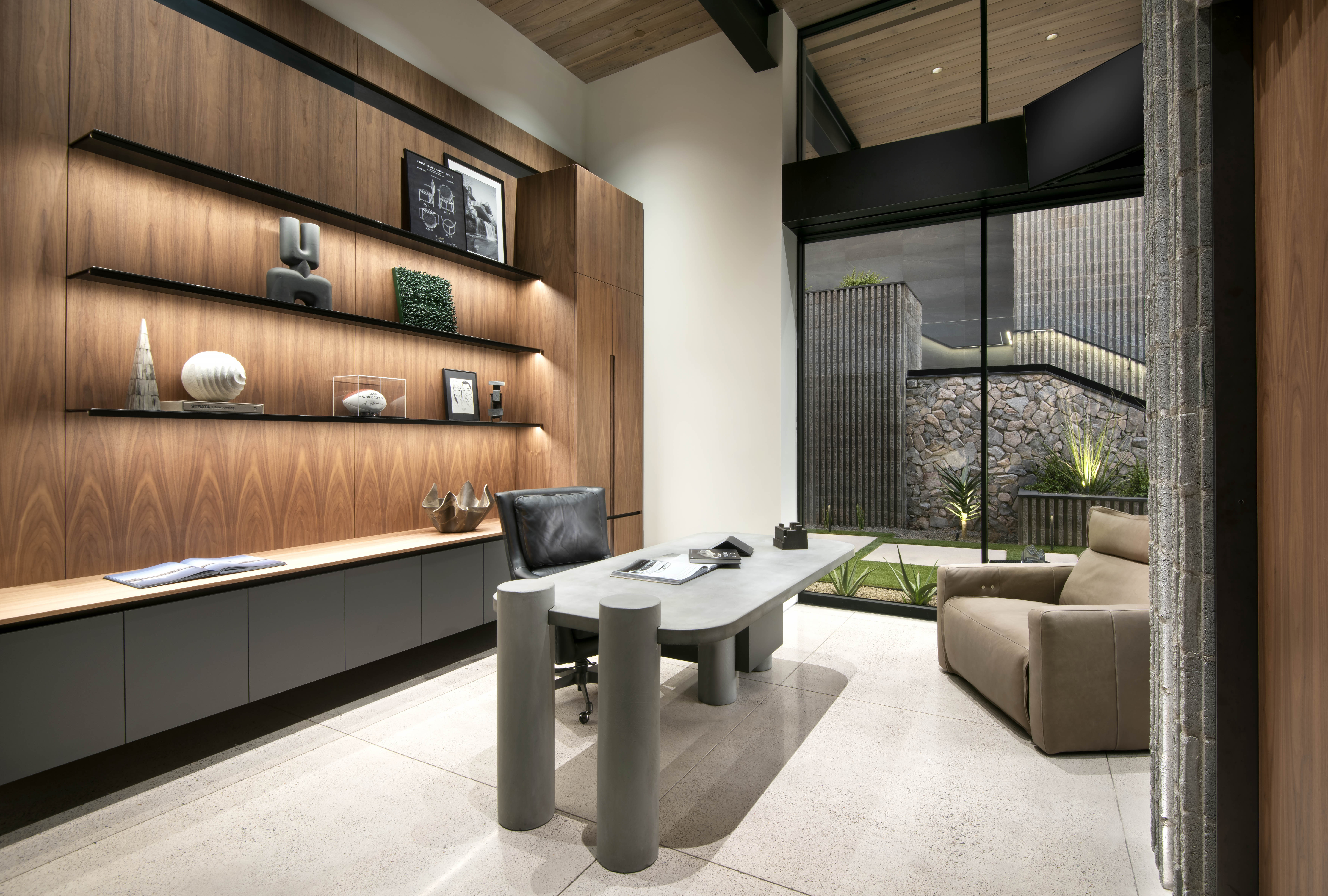
A home office wired for today’s equipment and whatever comes next.
We also plan accessible conduit pathways at key locations so replacement or additional cabling can be pulled later. Proper sizing, gradual bends, and accessible endpoints make those pathways useful. Fiber may be appropriate for longer connections or links to detached buildings, while speaker wire and any required control cabling are specified for the equipment they will serve.
For a Scottsdale home, that might include connections for a detached structure, shaded patio, or poolside entertainment area. On the Kona coast, it could mean planning audio and network coverage for a lanai or a separate ohana. Those spaces belong in the initial design, even if the equipment will be added later.
Poolside spaces belong in the initial wiring plan.
Once walls and ceilings are closed, additions become more disruptive. Planning for a future office or outdoor access point during prewire is simpler and far less expensive than opening finished surfaces to reach it.
Cable That Leaves the House Has a Tougher Job
Outdoor speakers, outdoor wireless access points, security cameras, all-weather TVs, and pool-control equipment need cabling suited to their location. Some runs are exposed to sunlight; others travel through exterior walls or underground conduit. Each condition affects what should be specified.
In Scottsdale and Paradise Valley, exposed installations need to account for intense sun and heat, as well as water exposure. Along the Kona coast, moisture and salt exposure also influence the selection of connectors, enclosures, and mounting hardware. Neither location allows us to treat outdoor wiring like an indoor installation.
Outdoor cabling here has to handle desert sun and heat.
Exposed cable needs the appropriate outdoor, sunlight-resistance, and temperature ratings. Cable installed directly in the ground must be rated for direct burial. Underground conduit also requires cable suitable for wet conditions because water can collect inside it. Conduit provides physical protection, but it does not make ordinary indoor cable suitable for an underground run.
Installation matters as much as the jacket rating. Cable must be routed within its specified bend radius and pulling limits, with connections protected from the environment. Where outdoor cabling enters the house, its indoor rating and any necessary transitions also need to be addressed.
Wi-Fi Depends on Cable More Than You Expect
Wireless technology depends on wired infrastructure. In a professionally designed home network, wireless access points are typically connected by Ethernet cable to a network switch. Many also receive power over that same cable through Power over Ethernet, or PoE.
At CSI, we also hardwire compatible TVs, streaming devices, cameras, and other stationary equipment whenever possible. This reduces demand on Wi-Fi and preserves wireless capacity for phones, tablets, laptops, and other devices that need it.
Wiring alone doesn’t determine coverage. Access point placement, building materials, the size of the property, and the number of connected devices all affect performance. A single access point tucked into an equipment closet may not adequately serve a sprawling Scottsdale home or reach a Kona lanai. Indoor and outdoor coverage should be designed around the spaces where people will actually use the network.
 |
|
| Access point placement carries Wi-Fi across large rooms and out to the pool. |
Cable is one piece of that larger plan. Equipment space, power, ventilation, and service access also need to fit the architecture. Wiring routes should be coordinated with the electrical installation, with appropriate separation and protection. Those decisions are decided when we’re working alongside the architect, builder, or developer from the beginning.
Once the drywall goes up, this infrastructure disappears from view. Its value shows up in everyday use: reliable connections in the home office, music on the patio, and practical pathways for future upgrades.
If you’re a homeowner, architect, builder, or developer planning a new home or major renovation in Scottsdale, Paradise Valley, or Kona, we’d like to join the conversation before framing begins. Reach out to Creative Sound and Integration, and we’ll start with what goes behind your walls.
Arizona: 480.998.9699 | Hawaii: 808-756-4293